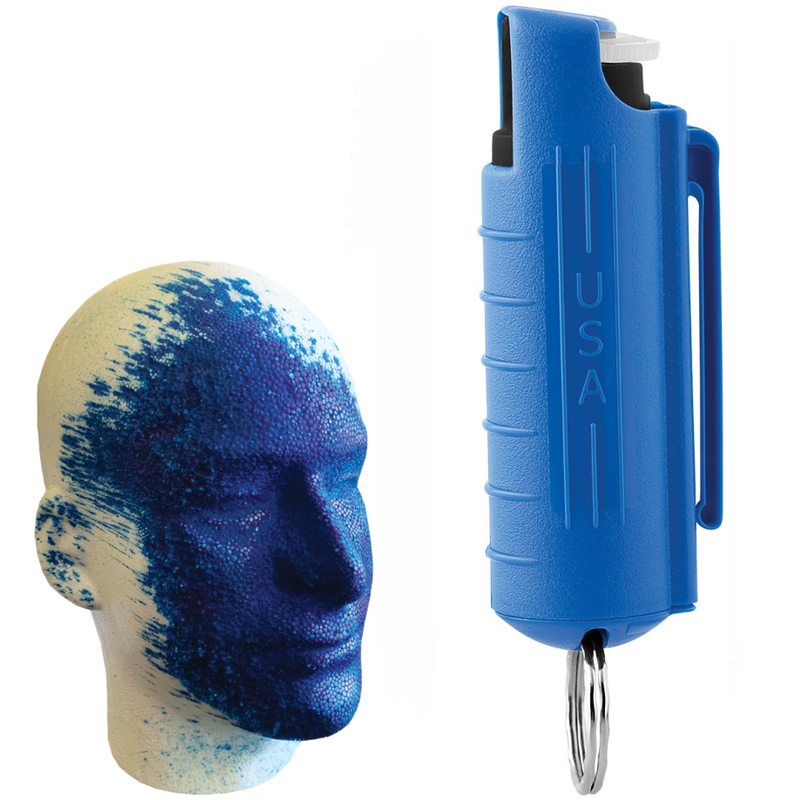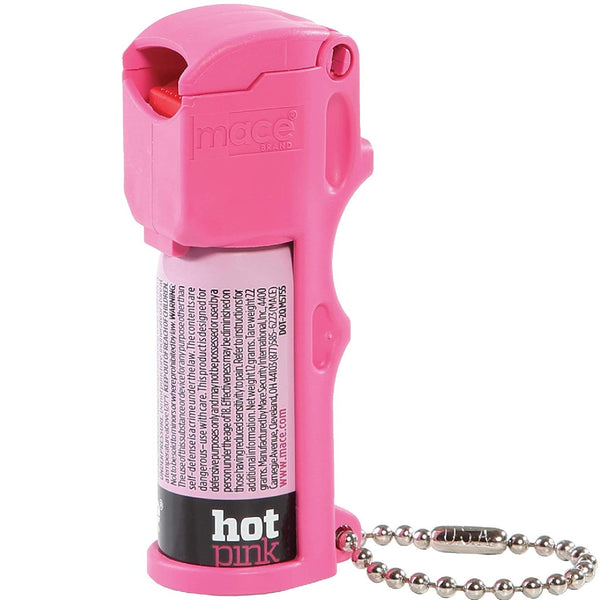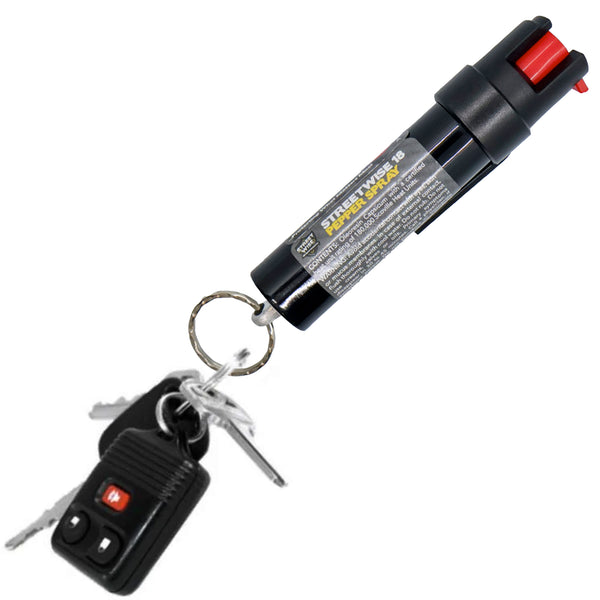

Pepper spray is not allowed in carry-on bags on a plane, but the Transportation Security Administration (TSA) may allow one small container in checked baggage if it meets strict requirements. TSA says one 4 fl. oz. container of mace or pepper spray is permitted in checked baggage if it has a safety mechanism to prevent accidental discharge. Self-defense sprays with more than 2% by mass of tear gas, including CS or CN, are prohibited in checked baggage.
Traveling with pepper spray can be confusing because TSA guidelines are not the only rules that matter. Airlines can set stricter limits, and some carriers may not allow pepper spray in checked bags at all. International trips add another layer because pepper spray may be restricted or illegal under the laws of your destination, even if it is legal in your state.
Pepper spray is also banned from the cabin for practical safety reasons. If pepper spray goes off inside a plane, it can affect passengers and crew in a closed space. The National Institute of Justice describes pepper spray as oleoresin capsicum, a less-lethal personal defense tool used to incapacitate through irritation and pain. Medical sources also note that pepper spray can affect the eyes, skin, respiratory tract, and mucous membranes.
In this article, we explain TSA pepper spray regulations, checked baggage rules, carry-on restrictions, airline policies, international travel concerns, cruise limits, and safer travel alternatives. We also cover pepper gel, TSA-approved pepper spray claims, concealed carry permits, known airlines with stricter rules, and what to do if you still want a legal personal defense spray after you land.
Quick Answer: Can You Bring Pepper Spray on a Plane?
Pepper spray cannot go in your carry-on bag. It may be allowed in checked luggage only if it meets TSA and FAA requirements and your airline allows it. Before you choose carry-on or checked luggage for any personal safety tool, check the official rules for that item.
| Question | Answer |
|---|---|
| Can you bring pepper spray in a carry-on? | No. TSA does not allow pepper spray in carry-on bags. |
| Can you bring pepper spray in checked bags? | Yes, only if it meets TSA rules and your airline allows it. |
| What is the TSA size limit? | One 4 fl. oz. / 118 ml container of pepper spray. |
| Does it need a safety lock? | Yes. The container must have a safety mechanism to prevent accidental discharge. |
| Can airlines ban it? | Yes. Airline rules can be stricter than TSA guidelines. |
| Is pepper gel treated differently? | No. Pepper gel is still a self-defense spray for travel purposes. |
| Should you bring it internationally? | Usually avoid it unless you confirm airline, airport, transit, and destination laws. |
What Are TSA Pepper Spray Regulations?

TSA does not allow pepper spray in carry-on bags. This includes purses, backpacks, belt bags, personal items, pockets, and other carry-ons. A small keychain pepper spray may look like a travel-size item, but it is still a self-defense spray and should not go through the security checkpoint with you.
The TSA 3-1-1 liquids rule does not change this. Pepper spray is not treated the same way as shampoo, lotion, hand sanitizer, or perfume. Even if the canister is smaller than 3.4 oz., the carry-on answer is still no because TSA treats it as a restricted personal defense spray.
Checked baggage has a different rule. TSA may allow one small container of mace or pepper spray in checked baggage if the container is 4 fl. oz. or smaller, has a safety mechanism, and contains no more than 2% by mass of CS or CN tear gas. FAA PackSafe rules also treat mace and pepper spray as self-defense sprays allowed in checked baggage only under the same size and quantity limits.
You should still check your airline before you pack it. TSA and FAA rules set the baseline for air travel, but airlines can set stricter policies. If your airline bans self-defense sprays, mace, pepper spray, or tear gas, do not pack them even if the product meets the TSA size limit.
| Rule | What It Means |
|---|---|
| Carry-on bags | Pepper spray is prohibited. |
| Checked baggage | One qualifying container may be allowed. |
| Size limit | The container must be 4 fl. oz. / 118 ml or smaller. |
| Safety mechanism | The canister must help prevent accidental discharge. |
| CS or CN limit | Sprays with more than 2% by mass of CS or CN are prohibited. |
| Airline policy | Your airline can still ban pepper spray. |
Is It Safe to Check in Pepper Spray on a Plane?
Checking pepper spray can be allowed, but it is not risk-free. Pepper spray is a pressurized self-defense product. If it leaks or discharges, it can irritate the eyes, skin, throat, and respiratory system. That is why the safety lock, container condition, formula, and packing method matter.
The risk is lower when the canister is small, locked, sealed, undamaged, and packed in a protective pouch inside checked baggage. The risk increases when the canister is dented, expired, loose in the bag, missing a safety lock, or unclear about its formula. A damaged canister should not be packed for air travel because baggage goes through handling, movement, and pressure changes.
If you decide to check pepper spray, keep it in its original container and make sure the safety mechanism works. Place it in a sealed plastic bag or protective pouch so it does not press against hard objects inside your suitcase. Do not pack it near items that can press the trigger or damage the canister.
For many travelers, the safer choice is to avoid flying with pepper spray at all. You can check the laws at your destination and buy a legal pepper spray after arrival if you need one. This avoids TSA issues, airline refusal, baggage leaks, and international law problems.
Why Is Pepper Spray Not Allowed on Planes?

Pepper spray is not allowed in the cabin because it can affect passengers and crew in a confined space. A plane cabin gives people limited room to move away from the spray. Passengers sit close together, and a small discharge can spread irritation beyond the person closest to the canister.
Pepper spray exposure can cause burning eyes, coughing, throat irritation, skin discomfort, and breathing difficulty. People with asthma, respiratory conditions, or other sensitivities may have stronger reactions. Flight attendants also need a stable cabin environment so they can manage safety issues during the flight.
This is why pepper spray is not treated like a normal travel liquid. The concern is not only the size of the container. The main concern is what the product is designed to do if it activates inside the cabin.
What Happens If TSA Finds Pepper Spray in Your Bag?
TSA can stop pepper spray if it is found in a carry-on bag or if the checked item does not meet the rules. At the checkpoint, TSA agents can inspect the bag and decide what happens to the item. Pepper spray is not allowed through the checkpoint, so you may have to surrender it, remove it from your bag, or follow the airport’s disposal process.
TSA agents will confiscate pepper spray if it is prohibited, unsafe for travel, or not allowed through airport security. TSA can also impose civil penalties for prohibited items and security violations. The penalty depends on the item, the circumstances, and TSA enforcement rules.
The simplest way to avoid delays is to check your bag before you leave for the airport. Remove pepper spray from purses, backpacks, gym bags, jacket pockets, and keychains. Many travelers forget small pepper sprays because they attach them to keys or daily carry items.
Can You Bring Pepper Gel on a Plane?
Pepper gel should be treated like pepper spray for air travel. It is still a self-defense spray, even though the formula comes out as a gel stream instead of a wider mist. Travelers should not assume pepper gel gets a separate carry-on exception.
Do not pack pepper gel in your carry-on bag, purse, pocket, backpack, or personal item. If you want to pack pepper gel in checked baggage, use the same TSA and FAA limits that apply to pepper spray. The container should be 4 fl. oz. or smaller, should have a safety mechanism, and should follow the CS or CN tear gas restriction.
Airline wording also matters. Some carrier policies use broad terms like self-defense sprays, disabling sprays, incapacitating sprays, mace, or tear gas. Those terms can include pepper gel even when the airline does not name pepper gel directly.
Are There TSA-Approved Pepper Sprays?
There is no universal “TSA-approved pepper spray” label that guarantees a product can fly with you. A product can be compact, travel-size, keychain-friendly, or pocket-size and still be banned from carry-on bags. Marketing language does not override TSA, FAA, airline, or destination rules.
A pepper spray canister still has to meet the current checked baggage requirements. It must be within the size limit, have a safety mechanism, and meet the CS or CN tear gas restriction. Your airline must also allow it in checked baggage.
This matters because many pepper spray products are sold for everyday carry, not air travel. Before you pack one, check the official TSA page, the FAA PackSafe chart, and your airline’s hazardous items page. If the product label does not clearly support the rule, leave it out of your luggage.
Can You Fly With Pepper Spray if You Have a Concealed Carry Permit?
A concealed carry permit does not allow pepper spray in a carry-on bag. Air travel rules apply at the airport and on the aircraft. TSA decides what can pass through the security checkpoint, FAA hazardous materials rules affect what can travel by air, and airlines can set stricter baggage policies.
A permit may affect whether you can carry a defensive tool in a specific state, but it does not override TSA or airline rules. You still need to follow the same carry-on and checked baggage limits as any other traveler.
If you have a concealed carry permit, check the rules before your trip. Do not assume your permit applies across state lines, international borders, airports, cruise terminals, or airline baggage policies.
Can You Bring Pepper Spray on United, Delta, Southwest, American Airlines, or Frontier?
You should check your airline before you pack pepper spray because airline rules can be stricter than TSA guidelines. TSA may allow one qualifying pepper spray in checked baggage, but an airline can still ban it from all baggage.
This matters for known airlines such as United, Delta, Southwest, American Airlines, and Frontier. The answer can change by carrier because each airline can apply its own hazardous materials policy. We recommend checking your airline’s current restricted items page before you pack any self-defense items.
Do not rely on a general TSA answer if your airline says no. Look for terms such as mace, pepper spray, tear gas, self-defense sprays, disabling sprays, incapacitating sprays, and hazardous materials. If your airline lists these as prohibited, leave the spray out of your bag.
| Airline or Carrier Type | What to Check |
|---|---|
| United Airlines | Check the dangerous items page for defense sprays, mace, pepper spray, and tear gas. |
| Delta Air Lines | Check the prohibited or restricted items page for mace, pepper spray, and similar defense sprays. |
| American Airlines | Check the restricted items page before you pack any self-defense spray. |
| Southwest Airlines | Check whether self-defense sprays are banned from checked and carry-on bags. |
| Frontier and other carriers | Check the carrier’s hazardous materials policy before travel. |
Can You Bring Pepper Spray on an International Flight?
Do not assume you can bring pepper spray on an international flight. U.S. TSA rules do not control every airline, airport, transit country, or destination country. Pepper spray may be legal in your state, but restricted or illegal where you land.
International travel can involve several rules at once. Your departure airport may have one rule. Your airline may have another rule. Your layover country may have another rule. Your destination country may treat pepper spray as a weapon, a prohibited item, or a controlled product.
This also applies to international airlines such as Ryanair. Some carriers prohibit the disabling, incapacitating, mace, pepper, capsicum, and animal repellent sprays in both cabin and checked bags. If the airline bans these items, do not bring pepper spray on that flight.
The safest international travel rule is to leave pepper spray at home unless you confirm every part of your route. Check the airline, departure country, transit country, destination country, and local laws after arrival. If you cannot confirm the rules, use a travel-safe alternative instead.
Can You Take Pepper Spray on a Cruise?
Most cruise travelers should not pack pepper spray. Cruise lines often prohibit weapons, disabling chemicals, mace, pepper spray, and other self-defense sprays. Cruise ships also have their own security rules, which can apply before boarding, during the trip, and at port stops.
Cruise travel can also involve multiple jurisdictions. A port country may have stricter laws than your home state. A cruise line may ban pepper spray even if the product is legal where you live. That makes pepper spray a risky item to pack for a cruise.
For cruise travel, choose safer options that support awareness and room security. A personal alarm, small flashlight, door stop alarm, and portable door lock may be more practical for cabins, hotels, shore excursions, and ground travel.
Can You Ship Pepper Spray or Buy It After You Land?
Shipping pepper spray may be possible in some cases, but it can be subject to hazardous materials rules, carrier restrictions, state laws, and local rules. You should not assume you can mail or ship it like a normal household item.
Before you ship pepper spray, check the shipping carrier’s hazardous materials policy and the laws at the destination. Some carriers restrict aerosols, pressurized containers, defensive sprays, and chemical irritants. Some states or cities may also limit the size, formula, sale, or possession of pepper spray.
Buying pepper spray after arrival is often simpler if it is legal where you are going. This helps you avoid airport screening issues and airline baggage restrictions. It also makes it easier to choose a product that fits local law.
Can You Drive With Pepper Spray Instead of Flying With It?
Driving with pepper spray avoids TSA and airline rules, but it does not remove state and local laws. Pepper spray laws can vary by state, city, formula, size, and user age. A product that is legal in your home state may have restrictions somewhere else on your route.
If you plan to drive with pepper spray, check the laws for every state you will enter. Keep the canister secured, out of direct heat, and away from children. Do not leave pepper spray loose in a hot car because heat and pressure can damage the canister.
Driving may be easier than flying with pepper spray, but it still requires planning. Treat pepper spray like a regulated self-defense product, not a casual travel item.
What Self-Defense Can You Bring on a Plane?

You can bring some personal safety tools on a plane, but you should avoid weapons and chemical defense sprays in your carry-on. The best self-defense items for travel help you draw attention, improve visibility, or add security to your room after you arrive.
If pepper spray is not allowed for your flight, choose travel-safe tools that help with attention, visibility, and room security instead. Personal alarms, flashlights, door stop alarms, and portable door locks are easier to pack than chemical self-defense sprays. For a deeper packing list, read our guide to travel safety tools for hotels and Airbnbs.
A personal safety alarm is one of the most practical options for travelers. It creates a loud sound that can attract attention during an emergency. A compact flashlight helps you see dark parking lots, hotel hallways, stairwells, and unfamiliar entry points. A door stop alarm or portable door lock can add another layer of security in hotels and short-term rentals.
| Travel Safety Item | Carry-On Friendly? | Why It Helps |
|---|---|---|
| Personal safety alarm | Usually yes, but check airline rules | Creates a loud alert and draws attention. |
| Flashlight | Usually yes | Helps you see dark areas around cars, hotels, and entrances. |
| Door stop alarm | Usually yes | Adds room awareness in hotels and rentals. |
| Portable door lock | Usually yes | Adds an extra door barrier where allowed. |
| Whistle | Usually yes | Gives you a simple way to call for attention. |
These tools do not replace awareness, local laws, or emergency services. They give travelers practical options that avoid many of the problems tied to pepper spray, weapons, and chemical defense items.
Should You Travel With Pepper Spray?
You should only travel with pepper spray if TSA, your airline, your destination, and any transit location allow it. For U.S. domestic flights, that means no carry-on pepper spray and only one qualifying checked baggage container if the airline allows it. For international flights, the safest answer is often no unless you have confirmed every rule that applies to your route.
For many travelers, it is easier to leave pepper spray at home. You can buy a legal self-defense spray after you arrive if local law allows it. This helps you avoid airport delays, airline issues, baggage problems, and legal concerns at your destination.
Pepper spray can be a useful personal safety tool, but air travel imposes strict limits. Pack it wrong, and TSA may stop it. Pack it against airline policy, and your carrier may refuse it. Bring it into the wrong country, and the problem may become legal instead of logistical.
Final Checklist Before You Fly With Pepper Spray
Check every rule before you pack pepper spray for a flight. Start with TSA, then check your airline, then check your destination. Do not rely on the canister size alone because the formula, safety mechanism, carrier policy, and local law all matter.
Use this checklist before your trip:
-
Do not pack pepper spray in a carry-on bag.
-
Remove pepper spray from purses, backpacks, belt bags, pockets, and keychains.
-
Check that the container is 4 fl. oz. or smaller.
-
Check that the canister has a safety mechanism.
-
Check whether the spray contains CS or CN tear gas.
-
Check your airline’s hazardous items policy.
-
Check destination and transit laws for international trips.
-
Use a personal alarm, flashlight, door stop alarm, or portable door lock if the rules are unclear.
When in doubt, leave pepper spray out of your luggage. A travel safety tool only helps if you can legally and safely bring it with you.
FAQ: Can You Bring Pepper Spray on a Plane?
Use this frequently asked questions section to check the most common pepper spray travel rules before you fly.
Can you bring pepper spray on a plane?
You cannot bring pepper spray in a carry-on bag on a plane. TSA may allow one 4 fl. oz. container in checked baggage if it has a safety mechanism and meets the CS or CN tear gas limit. Your airline can still ban it, so check carrier rules before your trip.
Can you bring pepper spray in a carry-on?
No. Pepper spray is not allowed in a carry-on bag, purse, backpack, belt bag, pocket, or personal item. This includes small keychain pepper sprays, mace, pepper gel, and other defense sprays.
Can you pack pepper spray in checked baggage?
You may be able to pack one small pepper spray container in checked baggage if it meets TSA rules and your airline allows it. The container must be 4 fl. oz. or smaller, must have a safety mechanism, and must follow the CS or CN tear gas limit.
Does the 3-1-1 liquids rule apply to pepper spray?
No. The 3-1-1 liquids rule does not allow pepper spray in a carry-on bag. Pepper spray is a self-defense spray, so TSA treats it as a restricted item rather than a normal travel-size liquid.
Can you bring pepper gel on a plane?
Do not bring pepper gel in your carry-on bag. Pepper gel should follow the same air travel limits as pepper spray because it is still a self-defense spray.
Does TSA stop pepper spray?
TSA can stop pepper spray if it is found in a carry-on bag or if the checked item does not meet the rules. TSA officers make the final decision during screening.
Why is pepper spray not allowed on planes?
Pepper spray is not allowed in the cabin because it can affect passengers and crew in a confined space. If it discharges, it can cause eye pain, coughing, throat irritation, skin discomfort, and breathing difficulty.
Are there TSA-approved pepper sprays?
No product label can guarantee a pepper spray is TSA-approved for your trip. Travel-size or keychain pepper spray does not mean carry-on approved.
Can you fly with pepper spray if you have a concealed carry permit?
A concealed carry permit does not override TSA, FAA, airline, airport, or destination rules. You still cannot bring pepper spray in your carry-on bag.
Can you ship pepper spray to your destination?
You may be able to ship pepper spray in some cases, but it can be subject to hazardous materials rules, carrier limits, and destination laws. Buying a legal product after arrival is often simpler.
Can you drive with pepper spray instead of flying with it?
Driving avoids TSA and airline rules, but it does not remove state and local laws. Check pepper spray laws for every state or city on your route.
Can you bring pepper spray on an international flight?
Do not assume pepper spray is allowed on an international flight. TSA rules do not control every airline, airport, transit country, or destination country.
Can you bring pepper spray on United, Delta, Southwest, American Airlines, or Frontier?
Check the airline’s current restricted items policy before you pack. Some airlines ban pepper spray, mace, tear gas, or self-defense sprays even in checked baggage.
Can you bring pepper spray on Ryanair?
Do not assume Ryanair allows pepper spray. Some international airlines prohibit disabling sprays, incapacitating sprays, mace, pepper sprays, capsicum sprays, and animal repellent sprays.
Can you take pepper spray on a cruise?
Most cruise travelers should not bring pepper spray. Cruise lines often prohibit weapons, disabling chemicals, mace, pepper spray, and self-defense sprays.
What self-defense can you bring on a plane?
Travel-friendly safety tools may include a personal safety alarm, flashlight, whistle, door stop alarm, or portable door lock. These tools can help with attention, visibility, and room security without the same restrictions as pepper spray.