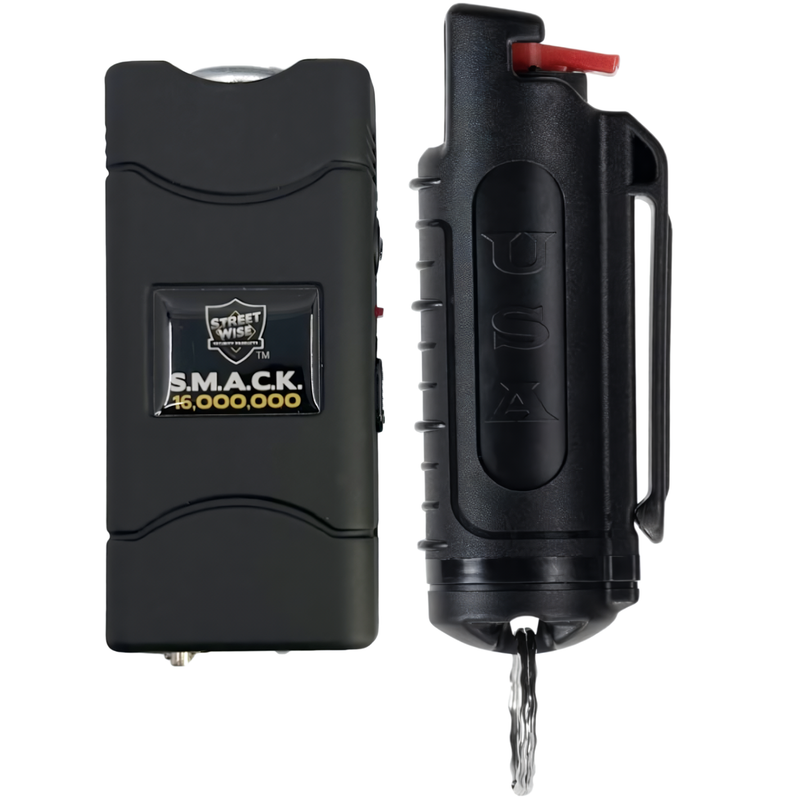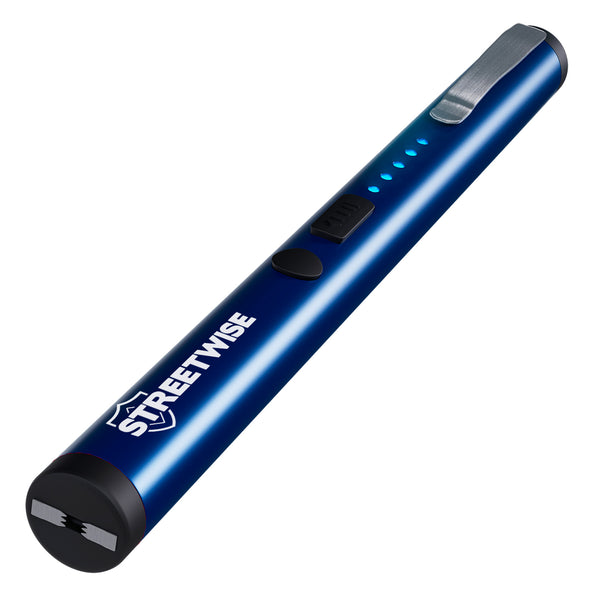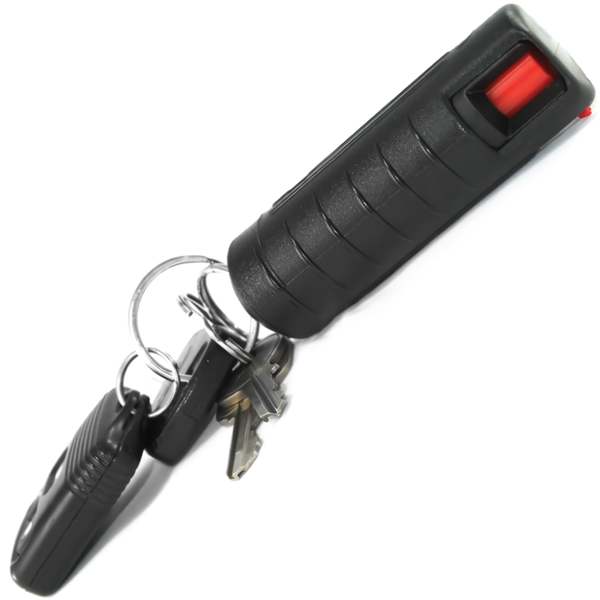

If you’re considering a stun gun or pepper spray, you’re probably asking one thing: which one will actually protect me if something goes wrong? For most people, pepper spray is the better starting point because it allows you to stop a threat from a safer distance. Stun guns are more effective in close situations, as they deliver an immediate electrical impact. Both tools have a purpose that solves different problems. So your chosen tool should depend on how much distance you want to achieve, quick response time, and your comfort level with a threat.
According to the National Institute of Justice (NIJ), the effectiveness of non-lethal self-defense tools depends on several factors, including environmental conditions, the behavior of the attacker, and the user’s ability to deploy the tool correctly. These factors often influence real-world outcomes more than the tool itself.
This article explains the key differences between stun guns and pepper spray, evaluates how each performs in real-life situations, and helps determine which option best fits specific self-defense needs. It also examines how distance, environment, and attacker behavior influence effectiveness so that selection relies on practical conditions rather than assumptions.
Stun Gun vs Pepper Spray: What’s the Difference?

Stun Guns
A stun gun is a compact, handheld self-defense device that delivers a high-voltage electrical charge upon direct contact with the attacker. This shock can disrupt the neuromuscular system, causing temporary disorientation.
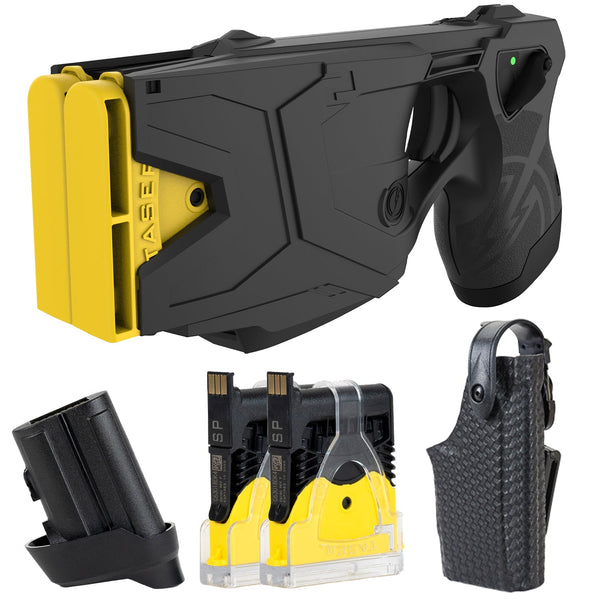
Unlike a TASER®, which deploys probes from a distance, stun guns must make close physical contact to be effective. This makes them ideal for personal protection in situations where an attacker is within arm’s reach. Law enforcement primarily uses them due to regulation and cost.
Stun guns do not fire projectiles. They need you to touch the attacker with the device to deliver a shock. For a deeper breakdown of how these factors impact performance, check out our detailed guide on microcoulombs vs. voltage in stun guns.
Pepper Spray
Pepper spray is one of the most popular and accessible non-lethal self-defense tools available. It contains oleoresin capsicum (OC), a compound derived from hot peppers that causes eye, skin, and respiratory irritation. It is the most effective at a distance of 10-12 feet, allowing you to stop a threat before it gets too close. Since it doesn’t require direct contact, it provides an added layer of personal safety and reaction time.
Before getting a pepper spray of your own, you need to understand local regulations first. Laws about pepper spray size, strength, and carry restrictions vary by location. Be sure to review our complete guide to pepper spray laws by state to ensure compliance.
Pepper Spray vs Stun Gun: Key Differences
| Feature | Stun Guns | Pepper Spray |
|---|---|---|
| Deployment Type | Contact-based (must touch the attacker) | Distance-based (spray protection) |
| Range | 0–2 feet | Typically 8–12 feet |
| Primary Effect | Neuromuscular disruption (loss of muscle control) | Inflammatory response (eye closure, breathing distress) |
| Reliability Factors | May be affected by thick clothing | May be affected by wind or poor aim |
| Targeting | Single target only | Can impact multiple targets in the spray path |
| Skill Requirement | Requires proximity and timing | Requires aim but less physical engagement |
| Legal Status (U.S.) | Varies by state/local law | Legal in all states with minor restrictions |
Comparison table showing differences between stun guns and pepper spray, including range, effects, and legal considerations.
Stun Gun vs Pepper Spray Effectiveness by Situation
While both tools are effective, their performance depends on distance, environment, and the attacker’s behavior. Use the table below to identify the better option based on the scenario quickly:
| Scenario | Best Choice | Reason |
|---|---|---|
| You want to stop someone before they get within arm's reach (e.g., parking lot, campus, sidewalk) | Pepper Spray | Allows you to create 8–12 feet of distance, giving you time to escape without physical contact. |
| An attacker is already grabbing or restraining you | Stun Gun | Effective in close quarters where distance is gone, and direct contact is unavoidable. |
| You're facing more than one aggressive person | Pepper Spray | The spray pattern can affect many individuals at once, increasing your chance to break away. |
| You're in a tight, enclosed space (elevator, hallway, stairwell) | Stun Gun | More controlled and less likely to affect you in confined areas compared to airborne spray. |
| It's windy or outdoors in unpredictable weather | Stun Gun | Wind can cause pepper spray blowback, while a stun gun's effectiveness isn't weather-dependent. |
| You want something simple and quick to deploy under stress | Pepper Spray | Requires less physical strength and no grappling. |
| The attacker is wearing heavy clothing or thick layers | Pepper Spray | Clothing doesn't reduce spray effectiveness, while thick fabric may limit electrical contact. |
| You're concerned about legal simplicity across states | Pepper Spray | Legal in all 50 states (with minor restrictions), with generally fewer purchasing limitations. |
In most everyday situations where distance is still possible, pepper spray offers a safety advantage. Once physical contact is unavoidable, a stun gun becomes more practical.
Real-World Considerations
Features don’t matter much if the tool doesn’t work in your situation. It depends on how they will perform under different conditions or circumstances. You have to take into account the environment, the attacker’s behavior, and your ability to deploy the tool under pressure.
| Scenario | Best Choice | Reason |
|---|---|---|
| Environmental Limitations | Stun guns require direct contact. Thick clothing, such as layered fabric, coats, and jackets, can reduce effectiveness by limiting the electrical contact with the skin. The performance of pepper spray can degrade in windy environments, where the risk of blowback is high. | The performance of pepper spray can degrade in windy environments, where the risk of blowback is high. |
| Physiological response variability | JSTOR indicates that electroshock devices (including stun guns) can disrupt voluntary muscle control. The effectiveness depends on the duration and quality. | A clinical review published in PubMed found that OC spray consistently causes involuntary eye closure within seconds of exposure. |
| Skill under stress | Both stun guns and pepper sprays need practice and familiarity. The pepper spray has a shorter learning curve, while the stun gun requires confidence in its use. | |
| Legal considerations | Stun guns are legal in most states, but be wary of permit requirements, location limitations, and possession restrictions. | Pepper spray is legal in 50 states but may be subject to size, permit, age, and location restrictions. |
User Feedback: What Users Actually Prefer
Public discussions help illustrate how people test these tools in practical scenarios. Platforms like Reddit and Quora show consistent patterns in user preference and reasoning.
Distance Is the Primary Advantage

Across both platforms, users consistently favor pepper spray because it allows you to engage a threat from several feet away. A Reddit user mentioned how “pepper spray allows you some distance.” This reduces the need for physical contact, which lowers personal risk.
Contact Requirement Limits Stun Guns

Many users point out that stun guns need direct contact, which can be difficult in a fast-moving or unpredictable situation. A commonly cited concern on both platforms is that you have to be close enough to touch them with the tool. This is often viewed as a limitation, especially for those without training.
These discussions focus on distance, usage, and reliability, which is why the pepper spray is more recommended. These insights should be considered alongside research and law enforcement sources.
Which Is Better for Self-Defense: Pepper Spray or a Stun Gun?
The right choice depends on the type of scenarios you’re preparing for and how reliably you can deploy the device under stress. If your primary concern involves close encounters where an attacker is within an arm’s reach, a stun gun may be a better option. If your goal is to create distance, protect yourself in environments such as campuses, parking lots, or other public spaces. Then, pepper spray is often the more practical solution.
Peer-reviewed research by PubMed shows that OC spray causes rapid sensory incapacitation through intense eye and respiratory irritation, often leading to temporary blindness and disorientation. Academic analyses available through JSTOR also note that while electroshock devices can be effective, their success depends on positioning, contact, and execution. The best tool is the one you can deploy confidently under stress.