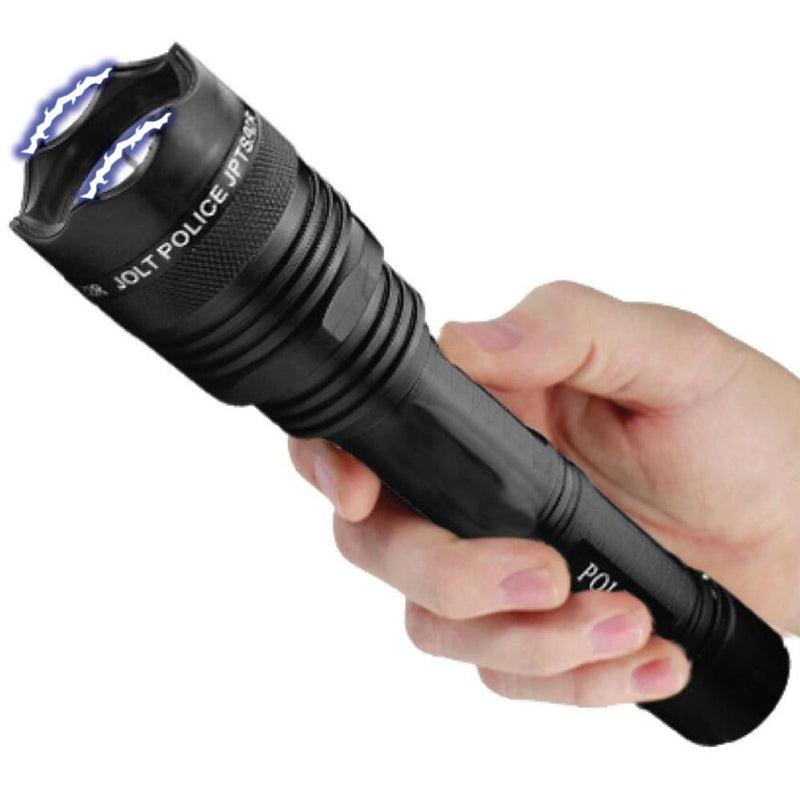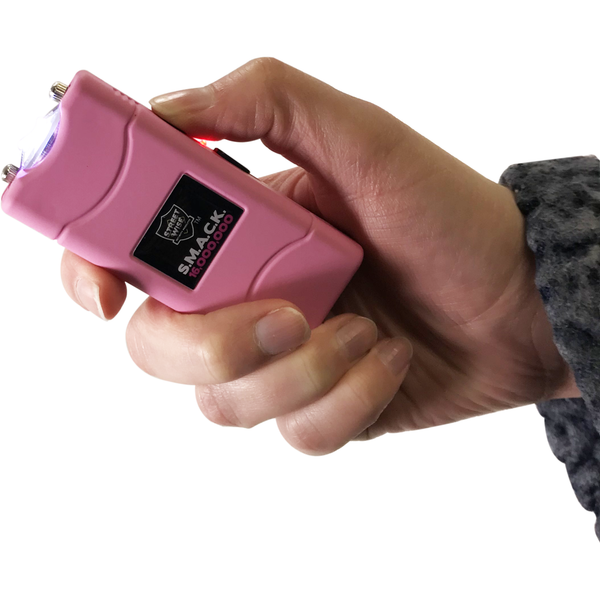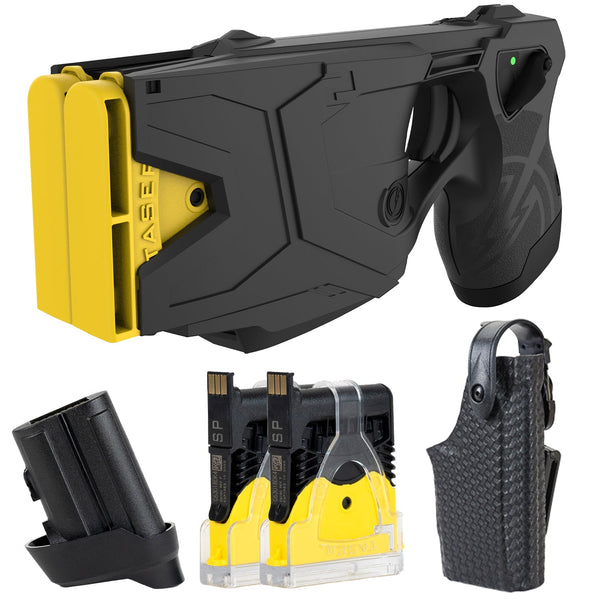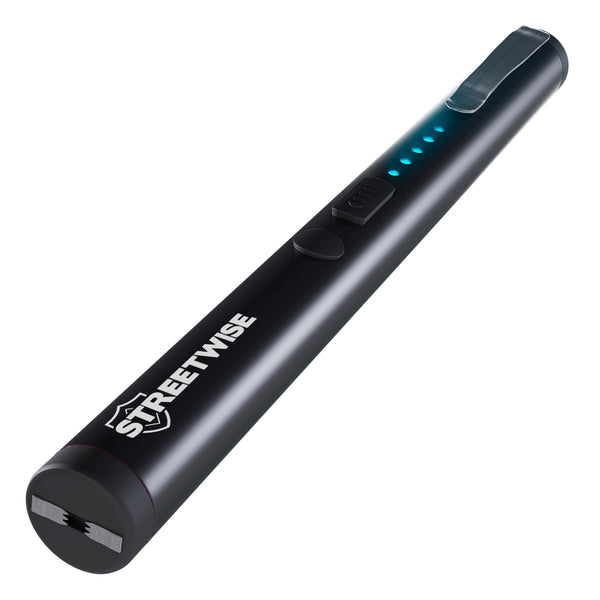

The stun gun market often highlights voltage as the primary indicator of performance. Claims such as “1 million volts stun gun” are common across product pages. However, stun gun voltage alone is not a reliable measure of how a stun gun performs in actual use.
An accurate way to assess effectiveness is by measuring electrical charge in microcoulombs (µC). This reflects the amount of energy delivered into the body, which relates to physiological response.
Research from the National Institute of Justice (NIJ) supports this distinction. Conducted energy devices (CED) are assessed based on electrical output, duration, and effects on the body rather than voltage figures.
What Makes a Stun Gun Effective?
The effectiveness of a stun gun is determined by how electrical energy interacts with the body during contact. This is not limited to the initial discharge, but rather the total energy delivered over a short duration.
Several factors influence stun gun performance:
- Electrical charge (microcoulombs)
- Voltage (volts)
- Current and pulse duration
- Contact time and placement
A 2011 NIJ report noted that measurable physiological effects correspond more with charge levels. Subjects began to experience pain at approximately 0.5 µC, while higher levels produced stronger responses. This reinforces that the body reacts to total energy delivered, not peak voltage.
Electrical Charge (Microcoulombs) in Stun Guns
Microcoulombs measure the total electrical charge delivered over time. From a physics standpoint, charge is derived from current multiplied by time. This makes it a more practical metric for understanding how much energy is transferred during use.
In application, a device that delivers high charge over a sustained duration is more likely to produce:
- Involuntary muscle contractions
- Disruption of motor control
- Increased physical compliance
Stun Gun Voltage (V) Explained
Voltage represents electrical potential. Its primary function in a stun gun is to start the discharge and allow current to pass through barriers. This allows the current to pass through clothing or skin resistance.
Once in contact, voltage becomes less relevant in determining the effect. It does not measure how much energy the body absorbs or how long that energy is felt. As a result, voltage alone is not a reliable indicator of effectiveness.
Current and Pulse Duration in Stun Guns
Current and pulse duration work together to influence how the shock is felt. The current refers to the flow of electricity, while pulse duration establishes how long energy is applied. A longer pulse duration allows more energy to enter the body, which increases the intensity of the effect.
Contact Time and Placement
Longer contact means a stronger effect as more energy is delivered over time. Short shocks may startle a response, while sustained contact increases the chance of muscle disruption.
Placement also affects effectiveness. Available research indicates that areas with a large muscle group respond more. It means more tissue for the electric current to affect. A study published in the Journal of Forensic and Legal Medicine found that the device is most effective with skin contact. It is less effective when contact is obstructed by clothing. The study reported a 68.5% effectiveness, taking into account factors such as poor contact and missed probes.
Among these, electrical charge is the most meaningful indicator because the human body responds to the energy delivered over time. Not the initial electrical pressure. This is why two stun guns with similar voltage can produce very different effects, depending on how much charge they deliver and how long that energy is applied.
Microcoulombs vs Voltage
The distinction between these two measurements is often misunderstood.
| Metric | Function | Limitation |
|---|---|---|
| Voltage | Enables electrical discharge | Does not reflect total energy delivered |
| Microcoulombs | Measures charge over time | More tied to physiological response |
Comparison table showing the functions and limitations of voltage and microcoulombs in measuring electrical discharge and charge delivery.
Voltage explains how the shock begins, while microcoulombs explain how the body responds. For evaluating stun gun performance, charge is the more meaningful metric.
Limitations of High Voltage Stun Guns
High-voltage stun guns are used in product marketing because they are easily communicated and appear comparable. However, these figures are measured under controlled conditions and do not reflect real-world use.
Several factors reduce the effectiveness of voltage in practice:
- Resistance to clothing
- Inconsistent contact
- Short exposure duration
These variables limit the amount of energy actually transferred. As a result, high voltage does not guarantee stronger performance.
Why Microcoulombs Matter More Than Voltage
Microcoulombs matter more than voltage because they measure the electrical charge delivered, not just the initial shock at the point of contact. The charge is determined by the current applied over time, which makes it an accurate way to understand the energy being transferred during use.
Research from the National Institute of Justice (NIJ) shows that conducted energy devices (CED) operate using high voltage but low current. The effects come from electrical energy that interacts with the neuromuscular system. It means that measuring the total charge provides a greater picture of how effective a stun gun would be.
Stun Gun Power Levels (Microcoulombs Explained)
Understanding stun gun power levels is only useful if you can apply them to real-world situations. Each microcouloumb range represents a different level of effectiveness. Additionally, choosing the right stun gun depends on how you plan to use it.
| Microcoulombs | Observed Effect | Practical Use |
|---|---|---|
| ~0.8 µC | Pain response | Deterrence |
| ~1.5–1.8 µC | Muscle interference | Increased compliance |
| ~2.0+ µC | Coordination loss | Temporary incapacitation |
| 3.0+ µC | Significant disruption | Greatest effectiveness |
Table showing microcoulomb levels and their observed effects and practical uses, ranging from pain response for deterrence at ~0.8 µC to significant disruption and greatest effectiveness at 3.0+ µC.
What Buyers Should Actually Look For
When evaluating a stun gun, technical specifications should be interpreted in context. Devices marketed primarily on voltage may not provide consistent performance. Consider how and where you plan to use it, how quickly you need to deploy it, and the level of reliability required in high-pressure situations.
More reliable indicators include:
- Defined electrical output beyond voltage
- Consistency of discharge
- Ease of use under stress
- Contact reliability
Choosing the Best Stun Gun for Self-Defense
Voltage plays a role in initiating a stun gun’s discharge, but it does not determine effectiveness. Electrical charge, measured in microcoulombs, provides a clearer representation of how much energy is delivered and how the body responds.
According to NIJ research, conducted energy devices are designed as controlled force options based on real operational performance rather than advertised voltage ratings.
If you’re looking for a high-power stun gun for protection, focus on devices that clearly define the performance beyond just voltage claims and offer a balanced combination of electrical charge, reliability, and ease of use.
For a clearer comparison of available models, refer to our current stun gun collection designed for self-defense. Whether you want compact personal devices or models with added features, choosing the right tool with meaningful specs and practical usability will give you a more dependable and effective self-defense option when it matters the most.