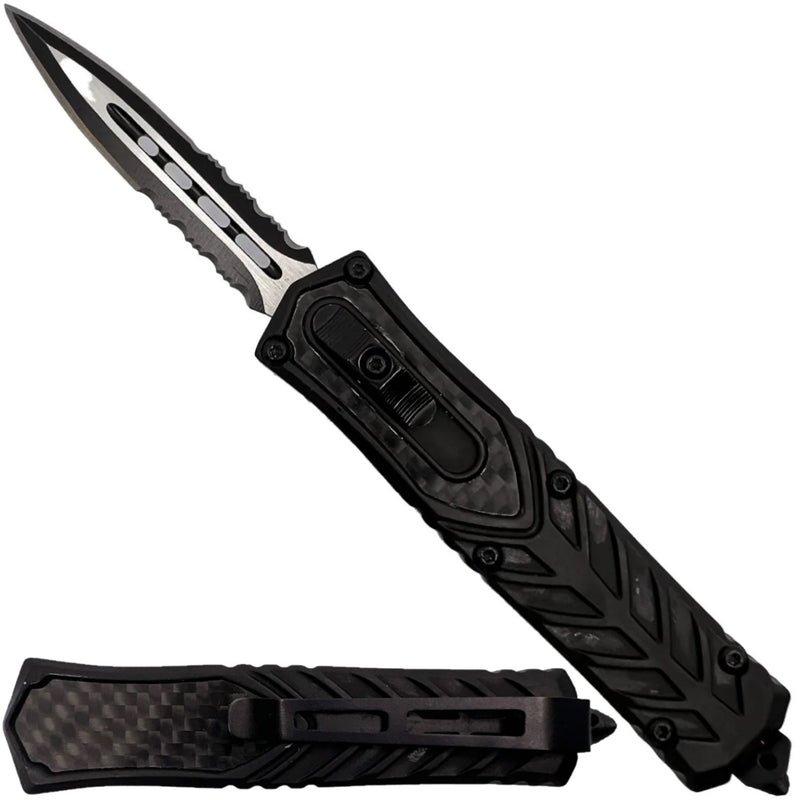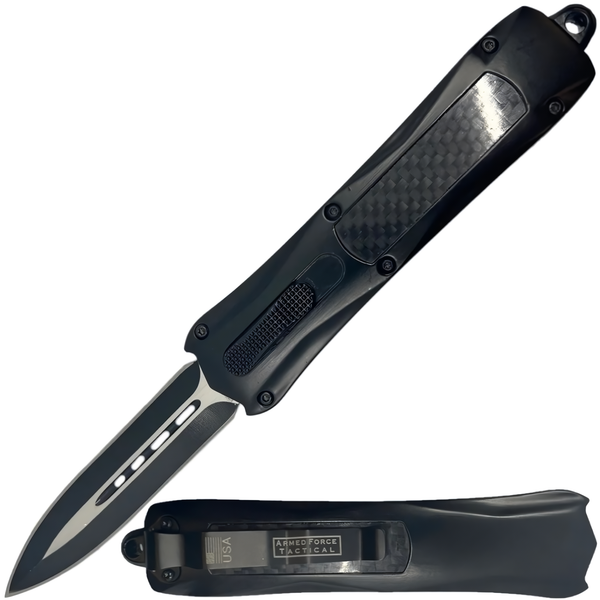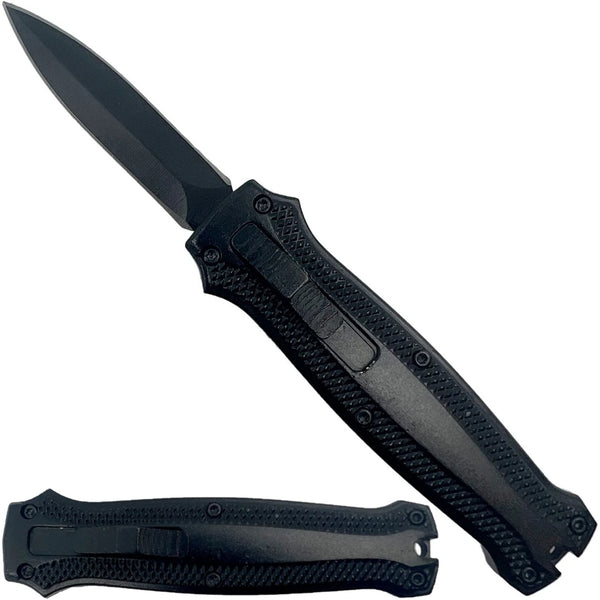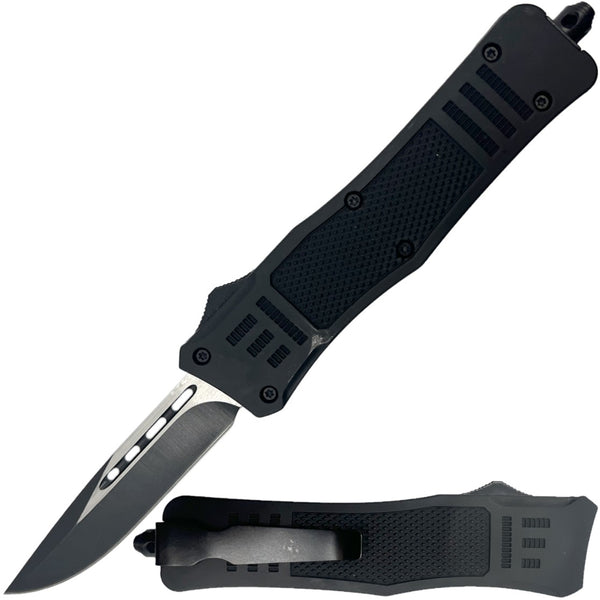

Out-the-front (OTF) knives are legal in many U.S. states, but the legality changes once you look at the length, location, and carry method of the blade. The American Knife & Tool Institute mentions that state knife laws treat possession, carrying, manufacturing, and sale differently, even when automatic knives are not fully prohibited. Some allow OTF knives with restrictions, while others consider them automatic knives or switchblades. It can mean that the same knife can be legal to own in one state, restricted to carry in another, or prohibited in other public places.
This article breaks down OTF knife laws by state so you can see where they are legal, restricted, or prohibited. It also explains the difference between a switchblade and an OTF knife, how single-action and double-action OTF knives work, and why state laws often focus on the opening mechanism instead of the knife style alone.
You can use this as a guide before you buy, carry, or travel with an OTF knife. Knife laws can change, and local rules may add limits for schools, government buildings, airports, courthouses, and other restricted areas. It is better to check your current state and local laws before carrying an automatic knife.
Table of Contents
- OTF Knife Laws by State
- How States Classify OTF Knives
- Switchblade vs OTF Knife: What Is the Difference?
- Single-Action vs Double-Action OTF Knives
- Federal Switchblade Law vs State OTF Knife Laws
- Is an OTF Knife Considered a Ballistic Knife?
- What to Check Before Buying or Carrying an OTF Knife
- State-Specific OTF Knife Questions
- OTF Knife Laws FAQ
- Check the Law Before You Carry
OTF Knife Laws by State
OTF knife laws vary by state because most statutes classify these knives under broader terms like automatic knife, switchblade, switch knife, or dangerous weapon. The table below gives a state-by-state overview of where OTF knives are generally legal, restricted, or heavily limited.
Legal Disclaimer: This article is for general information only and is not legal advice. Knife laws can change, and state rules may differ from city, county, or local ordinances. Schools, courthouses, airports, government buildings, private property, and other restricted locations may also have separate rules. Check your current state and local laws before buying, carrying, transporting, or traveling with an OTF knife.
Related legal guides: If you are comparing self-defense laws by state, review our guide to baton legality by state before carrying an expandable baton.
Last reviewed: May 29, 2026
How to read this table: “Generally legal” means the state does not appear to broadly prohibit OTF or automatic knives, but blade length, carry method, local ordinances, and restricted locations may still apply.
| State | OTF Knife / Automatic Knife Status | Key Restrictions to Check |
|---|---|---|
| Alabama | Generally legal | Check Alabama weapons law, restricted locations, school rules, and local carry limits. |
| Alaska | Generally legal | Check Alaska weapons law, age rules, school zones, and public building restrictions. |
| Arizona | Generally legal | Check restricted locations and local ordinances before public carry. |
| Arkansas | Generally legal | Check Arkansas weapons law, carry rules, and restricted-location limits. |
| California | Restricted | Check California Penal Code § 21510. Switchblade knives with blades 2 inches or longer are restricted in public places, vehicles, sale, transfer, loan, or giving. |
| Colorado | Legal with restrictions | Check Colorado Revised Statutes § 18-12-101 and § 18-12-105. Colorado defines “knife” as a blade longer than 3.5 inches for certain weapons laws. |
| Connecticut | Restricted | Check Connecticut weapons law on switch knives and automatic spring-release knives. Automatic knives with blades over 1.5 inches are restricted. |
| Delaware | Generally legal | Check Delaware weapons law, concealed carry rules, restricted locations, and local ordinances. |
| District of Columbia | Unlawful | Check D.C. Code § 22-4514. D.C. prohibits possession of weapons commonly known as switchblade knives, with limited exceptions. |
| Florida | Generally legal | Check Florida weapons law, concealed carry rules, school zones, and restricted areas. |
| Georgia | Generally legal | Check Georgia weapons law, blade length, carry method, and restricted locations. |
| Hawaii | Legal with restrictions | Check Hawaii Revised Statutes Chapter 134. Automatic knives may be allowed, but concealed carry and dangerous weapon rules still matter. |
| Idaho | Generally legal | Check Idaho weapons law, public building rules, school restrictions, and local ordinances. |
| Illinois | Legal with FOID requirement | Check 720 ILCS 5/24-1. Illinois law includes switchblade and automatic knife language, with an exception tied to valid FOID status. |
| Indiana | Generally legal | Check Indiana weapons law, restricted locations, school rules, and local ordinances. |
| Iowa | Generally legal | Check Iowa weapons law, concealed carry rules, public carry rules, and restricted-location rules. |
| Kansas | Generally legal | Check Kansas weapons law and restricted locations before carrying in public. |
| Kentucky | Legal with age restriction | Check Kentucky weapons law for age rules, carry method, and local restrictions. |
| Louisiana | Generally legal | Check Louisiana weapons law, carry method, restricted locations, and local rules. |
| Maine | Generally legal | Check Maine weapons law, public carry rules, and restricted-location rules. |
| Maryland | Possession legal, conceal restricted | Check Maryland Criminal Law § 4-101. Maryland includes switchblade knives under its “weapon” definition, which makes the carry method important. |
| Massachusetts | Legal after recent change | Check Commonwealth v. Canjura and current Massachusetts law. The 2024 Massachusetts Supreme Judicial Court ruling struck down the state’s switchblade restriction. |
| Michigan | Generally legal | Check Michigan weapons law, restricted locations, and local rules. |
| Minnesota | Forbidden | Check Minnesota Statutes § 609.66. Minnesota law includes the manufacture, transfer, or possession of a switchblade knife opening automatically. |
| Mississippi | Generally legal | Check Mississippi weapons law, location-based restrictions, and local rules. |
| Missouri | Generally legal | Check Missouri weapons law, carry rules, and restricted locations. |
| Montana | Generally legal | Check Montana weapons law, local rules, and restricted areas. |
| Nebraska | Generally legal | Check Nebraska weapons law, blade length, carry method, and local restrictions. |
| Nevada | Generally legal | Check Nevada weapons law, local ordinances, and restricted-location rules. |
| New Hampshire | Generally legal | Check New Hampshire weapons law, schools, courthouses, and other restricted places. |
| New Jersey | Restricted | Check N.J. Stat. § 2C:39-3 and § 2C:39-9. New Jersey law addresses possession and manufacture, transport, shipment, sale, or disposal of switchblade knives. |
| New Mexico | Heavily restricted | Check New Mexico Statutes § 30-7-8. New Mexico law restricts the manufacturing, possession, display, sale, lending, giving away, or purchase of switchblade-style knives. |
| New York | Restricted with exceptions | Check New York Penal Law § 265.01 and § 265.20. New York lists switchblade knives under criminal possession rules, with limited exceptions such as hunting, trapping, or fishing. |
| North Carolina | Legal with carry caution | Check North Carolina weapons law, concealed carry rules, and restricted locations before carrying. |
| North Dakota | Legal with blade limit | Check North Dakota weapons law for the 5-inch blade length limit and restricted-location rules. |
| Ohio | Generally legal | Check Ohio weapons law, restricted locations, and local rules. |
| Oklahoma | Generally legal | Check Oklahoma weapons law, schools, courthouses, and local restrictions. |
| Oregon | Generally legal | Check Oregon weapons law, carry method, and local rules. |
| Pennsylvania | Legal after recent change | Check Pennsylvania HB 1929 and 18 Pa.C.S. § 908. Pennsylvania removed automatic knives from the prohibited offensive weapons statute, but restricted locations still apply. |
| Rhode Island | Generally legal | Check Rhode Island weapons law, concealed carry rules, and restricted-location rules. |
| South Carolina | Generally legal | Check South Carolina weapons law, schools, courthouses, and other restricted places. |
| South Dakota | Generally legal | Check South Dakota weapons law and restricted locations before public carry. |
| Tennessee | Generally legal | Check Tennessee weapons law, restricted locations, and local carry rules. |
| Texas | Generally legal | Check Texas Penal Code Chapter 46. Texas defines a location-restricted knife as a knife with a blade over 5.5 inches, so blade length and location still matter. |
| Utah | Generally legal | Check Utah weapons law, restricted locations, and local carry rules. |
| Vermont | Generally legal | Check Vermont weapons law, local rules, and restricted places. |
| Virginia | Legal after recent change | Check Virginia weapons law. Automatic knives became allowed in 2023, but public carry and restricted-location rules still matter. |
| Washington | Heavily restricted | Check RCW 9.41.250 and RCW 9.41.251. Washington restricts spring blade knives and lists exceptions for law enforcement, firefighting, rescue, and military personnel while on duty. |
| West Virginia | Legal with age restriction | Check West Virginia weapons law for age requirements, carry rules, and restricted locations. |
| Wisconsin | Generally legal | Check Wisconsin weapons law, restricted locations, and local rules. |
| Wyoming | Generally legal | Check Wyoming weapons law, schools, courthouses, and local restrictions. |
Table source note: Sources used for this table include AKTI’s state automatic knife summary, state statutes, federal switchblade law, and selected court or legislative updates. This table is informational and not legal advice. Always confirm the current state and local law before buying, carrying, transporting, or traveling with an OTF knife.
How States Classify OTF Knives
Most state laws do not use “OTF knife” as the main legal term. They usually classify these knives under broader categories such as automatic knives, switchblades, switch knives, spring blade knives, gravity knives, or dangerous weapons. That is why the exact wording in each state law matters more than the product name used by a seller.
This classification affects how the knife can be owned, carried, sold, or transported. A state may treat a single-action OTF, double-action OTF, and side-opening switchblade under the same automatic knife rule if the blade opens by button, switch, spring, or mechanical action. Some laws also separate possession from carry, which means a knife may be legal to own at home but restricted in public.
Blade length can also change the legal answer. California uses a 2-inch threshold for switchblade restrictions, Connecticut restricts automatic spring-release knives over 1.5 inches, and Texas uses a 5.5-inch threshold for location-restricted knives. These examples show why OTF knife legality is not only about the opening mechanism.
Switchblade vs OTF Knife: What Is the Difference?

A switchblade is a broader legal category, while an OTF knife is a specific knife design. A switchblade usually refers to a knife that opens automatically when pressure is applied to a button, switch, or similar device in the handle. An OTF knife gets its name from the way the blade deploys straight out from the front of the handle.
Many OTF knives still fall under switchblade or automatic knife laws because of how their blades open. In simple terms, “OTF” describes where the blade comes out, while “switchblade” often describes the automatic opening mechanism that creates the legal issue. This distinction matters when reading state laws because the statute may never mention “out-the-front knife” by name.
| Knife Type | How It Opens | Why It Matters Legally |
|---|---|---|
| OTF knife | Blade deploys from the front of the handle. | Often treated as an automatic knife or switchblade if it opens by button, switch, or spring. |
| Side-opening switchblade | The blade opens from the side of the handle. | Usually treated as a switchblade or automatic knife. |
| Assisted-opening knife | The user starts the blade movement before the assist mechanism engages. | May be treated differently if the knife has a bias toward closure. |
| Gravity knife | Blade opens by gravity, inertia, or wrist movement. | Often regulated separately under state law. |
| Ballistic knife | Blade detaches and launches from the handle. | Treated as a separate restricted category under federal law. |
Single-Action vs Double-Action OTF Knives

A single-action OTF knife deploys the blade automatically, but the user usually retracts the blade manually. A double-action OTF knife deploys and retracts the blade with the same switch or control. Both designs are common in OTF knives and can fall under automatic knife laws because the blade deploys via a mechanical action.
The legal concern usually does not depend only on whether the knife is single-action or double-action. State laws usually focus on whether the blade opens automatically, how long the blade is, whether the knife is carried openly or concealed, and whether the location has separate restrictions. A double-action OTF may feel more advanced to the user, but that does not make it legally safer than a single-action OTF.
| Feature | Single-Action OTF Knife | Double-Action OTF Knife |
|---|---|---|
| Blade deployment | Automatic | Automatic |
| Blade retraction | Usually manual | Automatic |
| Main user benefit | Simple mechanism and strong deployment | Faster one-hand deployment and retraction |
| Legal concern | Often treated as an automatic knife | Often treated as an automatic knife |
| Best legal check | State automatic knife law | State automatic knife law |
Federal Switchblade Law vs State OTF Knife Laws
Federal switchblade law and state OTF knife laws are not the same thing. Federal law defines a switchblade knife as a knife with a blade that opens automatically by hand pressure applied to a button or device in the handle, or by inertia, gravity, or both. That definition helps explain why many OTF knives are legally reviewed as automatic knives or switchblades.
State law still controls many of the practical questions buyers care about most. That includes whether you can own an OTF knife, carry it concealed, carry it openly, keep it in a vehicle, sell it, or bring it into a specific public place. This is why the state table matters more for day-to-day carry than a federal definition alone.
The safest approach is to treat an OTF knife as an automatic knife for legal research unless your state law clearly says otherwise. Check the state statute, then check local ordinances and restricted locations. Schools, courthouses, airports, government buildings, and private property may have separate rules even when state law allows ownership.
Is an OTF Knife Considered a Ballistic Knife?
No, a standard OTF knife is not a ballistic knife. An OTF knife has a blade that slides forward from the handle, but the blade stays attached to the knife. A ballistic knife differs in that the blade detaches from the handle and is propelled by a spring-operated mechanism.
This distinction matters because ballistic knives are treated as a separate legal category. A standard OTF knife may still be restricted as an automatic knife or switchblade, but it is not automatically a ballistic knife. If a law mentions ballistic knives, do not assume it applies to every front-deploying automatic knife.
What to Check Before Buying or Carrying an OTF Knife
Check your state’s automatic knife law before buying or carrying an OTF knife. Look for the exact terms used in the statute, including automatic knife, switchblade, switch knife, spring blade knife, gravity knife, dangerous weapon, deadly weapon, concealed weapon, and restricted knife. These terms matter because a product page may call the knife an OTF, while the law may call it something else.
You should also check the blade length, open-carry rules, concealed-carry rules, vehicle carry, age requirements, local ordinances, and restricted locations. Schools, courthouses, airports, government buildings, public transit areas, and private businesses may have separate rules even when the state allows automatic knives. A state may also allow possession but restrict sale, transfer, manufacture, or carrying.
The same rule applies to other self-defense tools. Before you carry pepper spray, check our guide to pepper spray laws by state so you know where it is legal, restricted, or limited.
| Legal Factor | Why It Matters |
|---|---|
| Blade length | Some states allow automatic knives only under a certain blade length. |
| Opening mechanism | OTF knives are often regulated because they open automatically. |
| Carry method | Open carry and concealed carry may be treated differently. |
| Location | Schools, airports, courthouses, and government buildings often have separate restrictions. |
| Local ordinances | Cities and counties may add restrictions when statewide preemption is limited. |
| Age or permit status | Some states require a minimum age, permit, or qualifying status for certain knives. |
| Sale or transfer | A state may allow possession but restrict commerce, manufacturing, or transfer. |
Can Police Officers Carry OTF Knives?
Yes, police officers can carry OTF knives in some states when a law-enforcement exception applies. These exceptions often depend on the state, the officer’s duty status, agency policy, and the exact language of the statute.
Those exceptions do not usually apply to civilians. A state may restrict automatic knives for the public while allowing qualified officers, firefighters, rescue personnel, or military members to carry them while on duty. Civilian buyers should read the law carefully and avoid relying on law-enforcement exceptions unless they clearly qualify.
Does Texas Allow OTF Knives?
Yes, Texas generally allows OTF knives, but blade length and restricted locations still matter. Texas law uses the term “location-restricted knife” for a knife with a blade over 5.5 inches. That does not make every OTF knife illegal, but it does mean longer blades can create added limits in certain places.
This is why Texas should not be treated as a no-rules state for knife carry. Buyers still need to check blade length, location rules, schools, government buildings, and any place where knives may be restricted by law or policy. An OTF knife can be legal to own and still create problems if carried into the wrong location.
Are OTF Knives Legal in Massachusetts?
Yes, OTF knives are generally legal in Massachusetts after the 2024 Massachusetts Supreme Judicial Court decision in Commonwealth v. Canjura. Massachusetts OTF knife law changed after the 2024 Massachusetts Supreme Judicial Court decision in Commonwealth v. Canjura. That ruling struck down the state’s switchblade restriction, which makes older knife-law articles less reliable for Massachusetts searches. This is one reason the article should include a recent review date and primary legal source references.
Even with that change, Massachusetts buyers should still check current state law, local rules, and restricted-location rules before carrying an OTF knife. A court ruling can change the primary restriction, but it does not eliminate all possible limits on carry, transport, or use. Schools, courthouses, airports, and public buildings can still have separate rules.
Are OTF Knives Legal in Pennsylvania?
Yes, OTF knives are generally legal in Pennsylvania. The state removed automatic knives from its prohibited offensive weapons statute through HB 1929, which amended 18 Pa.C.S. § 908 to govern their treatment.
Pennsylvania buyers should still check current state law, local rules, and restricted locations before carrying. The legal change affects automatic knives, but it does not create permission to carry a knife anywhere. Schools, courthouses, government buildings, and private property may still restrict knives.
Are OTF Knives Legal in Connecticut?
OTF knives are legal in Connecticut only if the blade is 1.5 inches or shorter. Connecticut restricts switch knives and automatic spring-release knives with blades over 1.5 inches, so many standard OTF knives may not qualify, as they often exceed that length.
Connecticut is one of the states where blade length decides the practical legal answer. A smaller automatic knife may be treated differently from a full-size OTF knife, so check the current statute and confirm the exact blade length before buying, carrying, or transporting one.
Are OTF Knives Legal in California?
OTF knives are legal in California only if the blade is under 2 inches. California restricts switchblade knives with blades 2 inches or longer under Penal Code § 21510. The restriction covers possession in a public place or vehicle, carrying, sale, transfer, loan, or giving, so blade length is the first detail California buyers need to check.
California may also have local rules that add limits beyond state law. A knife that meets the state blade-length rule may still be restricted in a city, school, courthouse, airport, public building, or private property. Check both state and local law before buying, carrying, or transporting an OTF knife in California.
Check the Law Before You Carry
OTF knives can be legal, restricted, or heavily limited depending on the state, blade length, carry method, and location. The most important legal detail is often not the name “OTF knife,” but whether the law treats the knife as an automatic knife, switchblade, spring blade knife, or dangerous weapon. That is why state statutes and local rules matter before you buy or carry one.
Knife laws can change, and restricted locations may have separate rules even when state law allows ownership. The safest approach is to check the law first and avoid carrying any automatic knife into places where weapons are restricted.
OTF Knife Laws FAQ
Are OTF knives legal in all 50 states?
No. OTF knives are not legal in all 50 states under the same rules. Some states allow them, while others restrict blade length, concealed carry, sale, possession, or public carry.
In what states are OTF blades illegal?
OTF blades are most restricted in states or jurisdictions that prohibit or heavily limit automatic knives, such as Minnesota, Washington, New Mexico, and the District of Columbia. Always check the current state and local law because restrictions may depend on possession, carry, sale, or user status.
Is an OTF knife the same as a switchblade?
An OTF knife can be a type of switchblade if it opens automatically by button, switch, spring, gravity, or similar mechanism. “OTF” describes the front-deploying blade design, while “switchblade” describes the automatic opening mechanism.
Is an OTF knife considered a ballistic knife?
No. A standard OTF knife is not a ballistic knife because the blade stays attached to the handle. A ballistic knife has a detachable blade that is propelled from the handle.
Are double-action OTF knives legal?
Double-action OTF knives are legal in some states, but they are usually still treated as automatic knives. State law, blade length, carry method, and location matter more than the retraction style.
Are single-action OTF knives legal?
Single-action OTF knives are legal in some states, but they can still fall under automatic knife or switchblade laws. A manual retraction feature does not make the knife legal if the state restricts automatic deployment.
Can you carry an OTF knife across state lines?
You should check every state you enter before carrying an OTF knife across state lines. A knife that is legal in your home state may be restricted in another state because of blade length, concealed carry, vehicle carry, or local ordinances.
Can police officers carry OTF knives?
Police officers may carry OTF knives in some states when a law-enforcement exception applies. Those exceptions usually do not apply to civilians.
Are OTF knives legal to carry or only legal to own?
It depends on the state. Some states allow ownership but restrict concealed carry, public carry, vehicle carry, sale, transfer, or carry in restricted locations. Always check both possession and carry rules before relying on a state’s “legal” status.