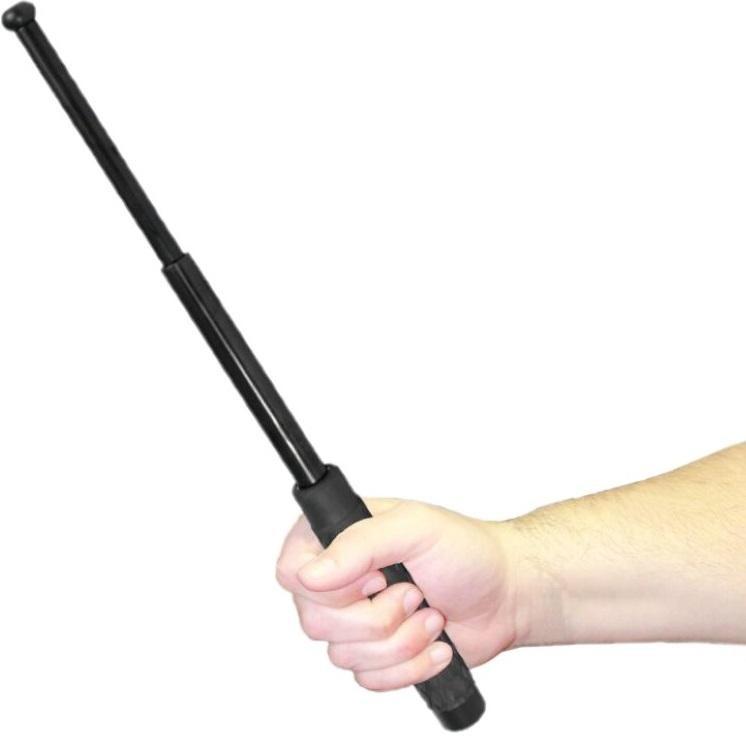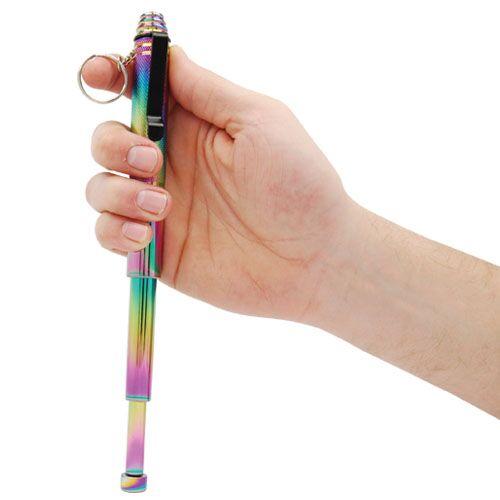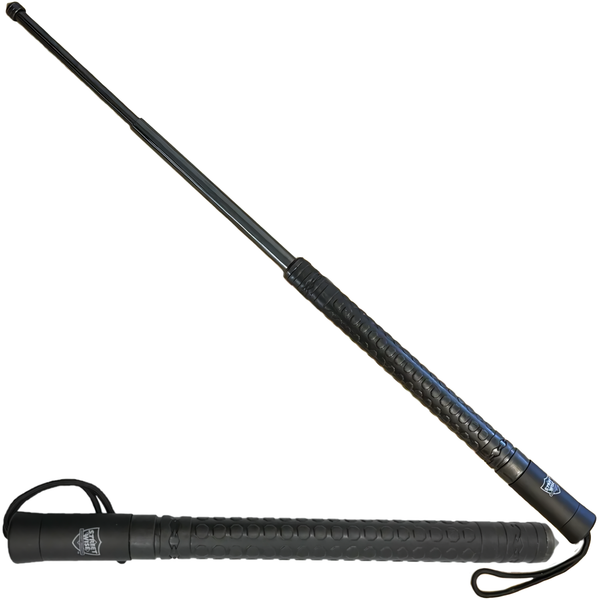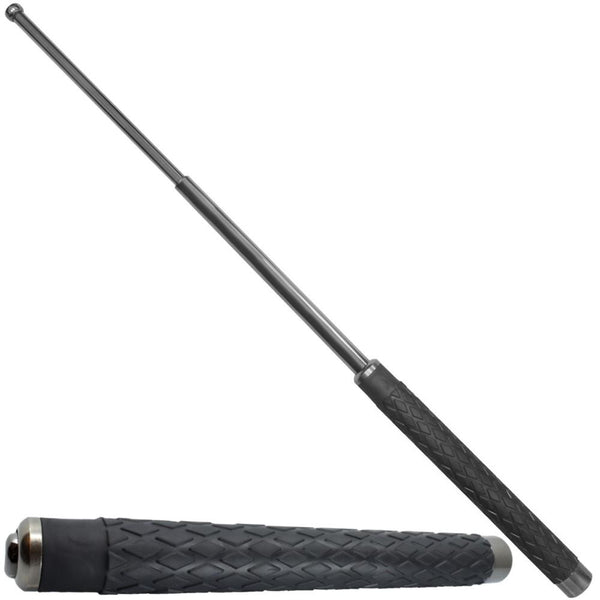

Expandable batons, also known as collapsible or telescoping batons, are not legal in every US state. The rules around them can vary. Some states allow civilians to own and carry them without restrictions. Other states classify them as prohibited weapons or limit their use to law enforcement.
State laws regulate three key areas:
- Possession (whether you can legally own one)
- Carry(including whether it can be kept in your vehicle)
- Use (generally limited to lawful self-defense)
According to legal guidance from organizations such as the United States Department of Justice and state criminal codes, batons are often grouped under “clubs” or “bludgeoning weapons.” This classification is why their legality varies by state and may involve restrictions, permits, or outright bans.
This guide provides a clear, state-by-state breakdown of expandable baton laws, including:
- Where collapsible batons are legal
- Whether you can carry one in your car
- If civilians are allowed to use them
- And what rules apply for home possession
If you are considering carrying an expandable baton for self-defense, it is essential to understand these laws to avoid violating state regulations.
What Is an Expandable Baton?

An expandable baton is a compact impact tool that extends into a rigid shaft when deployed. It is used by law enforcement for compliance and defensive control, but it is also marketed to civilians for personal safety.
From a legal standpoint, most states do not distinguish between baton types. Whether described as a telescoping baton or a collapsible baton, it is classified under the same category as clubs or impact weapons. This classification matters because many state laws regulate entire categories rather than specific product names.
Types of Batons
 The types of batons fall under the category of “expandable batons,” though several variations are recognized. While the functional differences are minimal, understanding these distinctions can help clarify how laws are applied.
A telescoping baton is the most used design. It consists of many sections that slide outward and lock into place when deployed. This type of standard is among law enforcement and is the model most sold for civilian self-defense.
A collapsible baton is a term that includes telescoping batons and similar designs that can be compacted for storage. In practice, most products marketed as collapsible batons are telescoping designs.
Expandable / Collapsible Baton Legality by State (2026)
| State | Legal Status for Civilian Ownership & Carry | Notes |
|---|---|---|
| Alabama | Legal | No state statute restricting baton ownership/carry. |
| Alaska | Legal | Not prohibited under state weapons law. |
| Arizona | Legal | No explicit prohibition of batons. |
| Arkansas | Legal | Not listed as prohibited in state statutes. |
| California | Legal with Restrictions | California Penal Code § 22210 prohibits batons; enforcement currently enjoined in Fouts v. Bonta (appeal ongoing). |
| Colorado | Legal | Baton possession/carry is not specifically restricted. |
| Connecticut | Illegal | Connecticut General Statutes § 53-206 prohibits carrying batons/nightsticks without exemption. |
| Delaware | Legal | No explicit prohibition. |
| Florida | Legal | Not prohibited; treated as a general weapon category. |
| Georgia | Legal | Not classified as a prohibited dangerous weapon. |
| Hawaii | Restricted / Local Interpretation | Hawaii Revised Statutes § 134-51 includes billy clubs and similar weapons. |
| Idaho | Legal | No clear prohibition in statutes. |
| Illinois | Illegal / Restricted | 720 ILCS 5/24-1 interpreted to restrict baton carry. |
| Indiana | Legal | Not prohibited under state weapon codes. |
| Iowa | Legal | No state law forbids baton ownership/carry. |
| Kansas | Legal | Baton possession/carry permitted. |
| Kentucky | Legal | No statute restricting batons. |
| Louisiana | Legal | No state prohibition. |
| Maine | Legal | No explicit statutory ban. |
| Maryland | Restricted | Dangerous weapon statutes restrict carry; exemptions apply. |
| Massachusetts | Illegal | Dangerous weapon classifications prohibit batons. |
| Michigan | Restricted | Michigan law regulates “dangerous weapons” under MCL § 750.224 and related statutes, which can include batons depending on how they are carried or intended use. |
| Minnesota | Legal | No explicit ban; generally interpreted as legal. |
| Mississippi | Legal | Permitted under state law. |
| Missouri | Legal | Not prohibited. |
| Montana | Legal | No restriction in law. |
| Nebraska | Legal | Not specified as prohibited. |
| Nevada | Legal | Ownership and carry permitted. |
| New Hampshire | Legal | No statutory prohibition. |
| New Jersey | Illegal | Blackjacks, batons, and similar impact weapons are prohibited under state law. |
| New Mexico | Legal | No statewide prohibition. |
| New York | Illegal / Restricted |
New York Penal Law states that dangerous weapon statutes restrict civilian possession/carry. |
| North Carolina | Legal | Not excluded in state code. |
| North Dakota | Legal | Ownership/carry allowed. |
| Ohio | Legal | No explicit ban. |
| Oklahoma | Legal | Not prohibited. |
| Oregon | Restricted | Legal to own and open carry; local restrictions on concealed carry may apply. |
| Pennsylvania | Legal | Not specifically listed as illegal. |
| Rhode Island | Restricted | Rhode Island regulates weapons under its dangerous weapons statutes, and federal court decisions, such as O’Neil v. Neronha, highlight how weapon restrictions are being reevaluated under constitutional law. |
| South Carolina | Legal | Ownership/carry allowed. |
| South Dakota | Legal | No prohibition. |
| Tennessee | Legal | Permitted under general weapon laws. |
| Texas | Legal | Ownership/carry permitted. |
| Utah | Legal | No explicit prohibition. |
| Vermont | Legal | No statutory restriction. |
| Virginia | Legal | Ownership/carry permitted. |
| Washington | Restricted / Local Interpretation | RCW restricts public carry despite ownership being allowed. |
| West Virginia | Legal | Ownership/carry permitted. |
| Wisconsin | Legal | Not prohibited. |
| Wyoming | Legal | Ownership/carry permitted. |
Disclaimer: Laws about expandable batons may change and can vary by state or local jurisdiction. While this information is current as of 2026, it may not reflect recent legal updates. Always verify with official state laws or consult a legal professional before purchasing or carrying a baton.
Are Expandable Security Batons Legal to Carry in The Vehicle?
Yes, in many states it is legal to carry a collapsible baton in your car, but only if possession is allowed under state law. It needs to be stored in compliance with local weapon regulations. The carrying of an expandable baton in a vehicle is an extension of general possession laws. However, the way the baton is stored can affect how the law is interpreted.
Some states consider easy access, such as keeping a baton in a glove compartment or center console, as a concealed carry. In states with strict concealed weapon laws, this can create legal risk. In contrast, storing a baton in a trunk or secured container may be treated more favorably under the law.
Intent also plays a key role. When you carry a baton for self-defense is generally acceptable where legal. However, circumstances suggesting unlawful intent may change how law enforcement evaluates the situation. According to FindLaw, self-defense claims and weapon possession are often evaluated based on both intent and the surrounding circumstances.
Can Civilians Use Collapsible Batons?
Yes, civilians can use collapsible batons in many states, but only when their use complies with self-defense laws and reasonable force standards. Under the US self-defense law, individuals may use force to protect themselves from an immediate threat. Additionally, the level of force must be appropriate to the situation. Courts apply a “reasonable person” standard, meaning the response must match what an average person would consider necessary under similar conditions.
According to Justia, self-defense laws require that force be both necessary and proportionate to the threat faced. Failure to meet these standards may result in legal consequences, even if the baton itself is legal to own.
Can You Have a Baton in Your Home?
Yes, in many states it is legal to keep a baton in your home for personal protection. Although this still depends on how the state classifies the weapon. Possession inside the home is treated more leniently than public carry. This is because self-defense laws often provide broader protections within a private house.
Staying Compliant with Expandable Baton Laws
Laws on expandable batons in the United States are not uniform. Understanding how they apply in your state is essential before making any purchase or carrying one for self-defense. Beyond state statutes, courts continue to play an important role in shaping the regulation of self-defense tools. Cornell Law School Legal Information Institute emphasizes that weapon classification and self-defense standards are often interpreted through both statutory law and judicial decisions. The laws can evolve, reinforcing the importance of staying informed.
Beyond state statutes, courts continue to play a role in shaping the regulation of self-defense tools. Cornell Law School Information Institute states that weapon classifications and self-defense standards are often interpreted through both statutory law and judicial decisions. This means that laws can evolve.
It is simple: owning a baton may be legal in your state, but how you carry and use it determines whether you remain within the law. Responsible ownership includes understanding storage requirements, using force only when justified, and avoiding unlawful intent.